
Titan II SLV (Lockheed Martin)
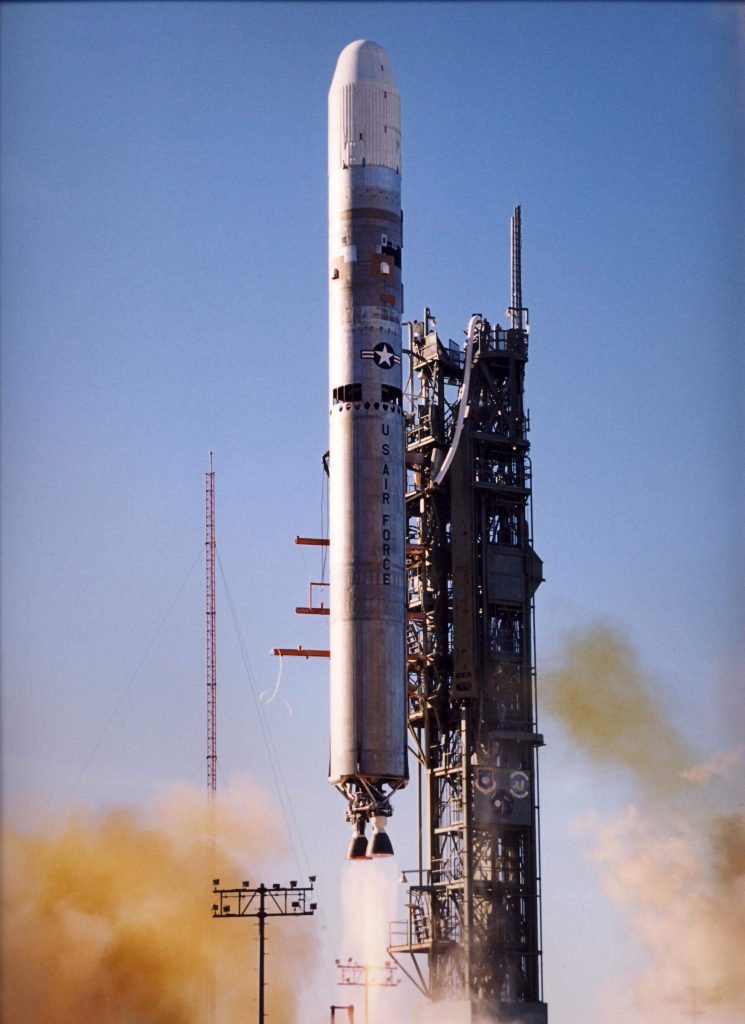
The Titan II SLV is a non-reusable, inactive launch vehicle manufactured by Lockheed Martin (established in 1953). It undertook its inaugural launch on 09/05/1988.
The Titan 23G, Titan II(23)G, Titan 2(23)G or Titan II SLV was an American expendable launch system derived from the LGM-25C Titan II intercontinental ballistic missile. Retired Titan II missiles were converted by Martin Marietta, into which the Glenn L. Martin Company, which built the original Titan II, had merged. It was used to carry payloads for the United States Air Force, NASA and NOAA. Thirteen were launched from Space Launch Complex 4W at the Vandenberg Air Force Base between 1988 and 2003.
Titan II SLV Specifications
| Variant | 23G |
|---|---|
| Length | 31.4 m |
| Diameter | 3.05 m |
| Stages | 2-3 |
| Launch Mass | 117 T |
| Takeoff Thrust | 1900 kN |
| LEO Capacity | 3600 kg |
Titan II SLV Launch Record
| Total Launches | 13 |
|---|---|
| Successful Launches | 12 |
| Failed Launches | 1 |
| Consecutive Successful Launches | 9 |
Manufacturer
Lockheed Martin's Space Division started in the production of missiles and later ICBM's in the 1950s. Their TITAN missile system was used for 12 Gemini spacecraft and the Voyager probes. They have worked largely in collaboration with NASA on many of their probes, landers, and spacecraft, and hope to play a key role in NASA's return to the moon in 2024.