
Juno-I (Chrysler)
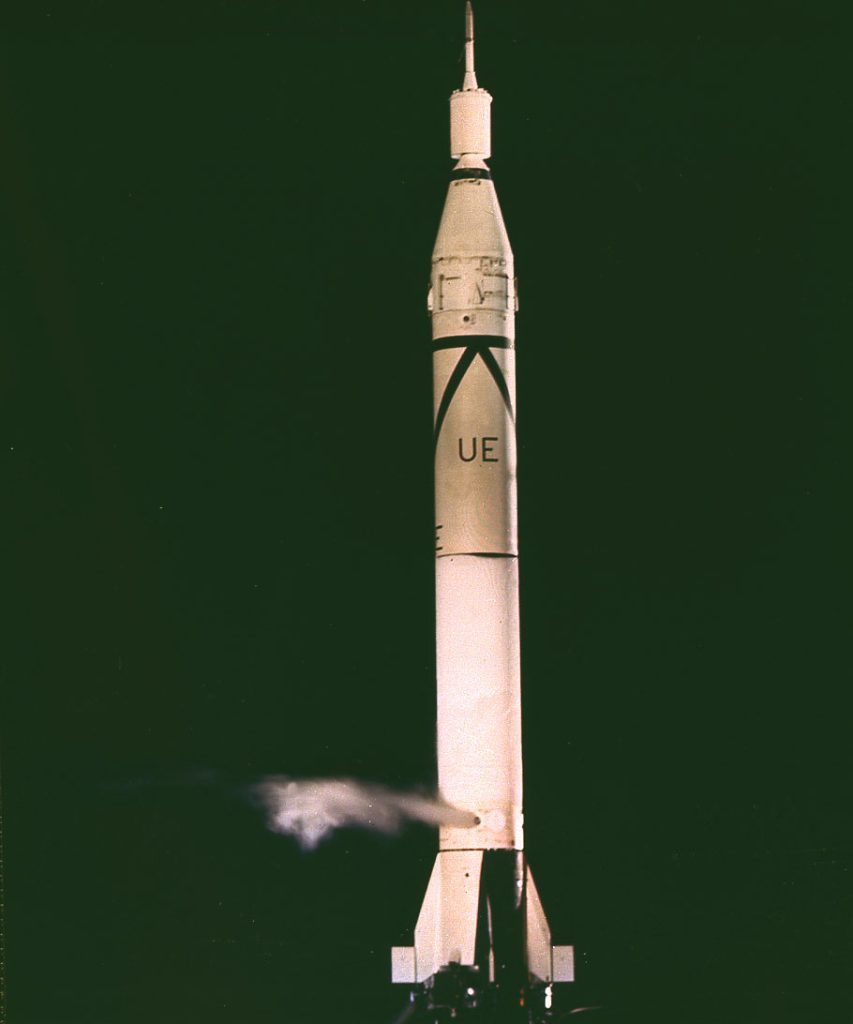
The Juno-I is a non-reusable, inactive launch vehicle manufactured by Chrysler (established in 1950). It undertook its inaugural launch on 01/31/1958.
The Juno I was a four-stage American booster rocket which launched America's first satellite, Explorer 1 in 1958. A member of thr redstone family, it was derived from the Jupiter-C sounding rocket.
Juno-I Specifications
| Variant | Juno I |
|---|---|
| Length | 21.2 m |
| Diameter | 1.78 m |
| Stages | 4 |
| Launch Mass | 29 T |
| Takeoff Thrust | 416 kN |
| LEO Capacity | 11 kg |
Juno-I Launch Record
| Total Launches | 6 |
|---|---|
| Successful Launches | 3 |
| Failed Launches | 3 |
Manufacturer
In July 1959, NASA chose the Redstone missile as the basis for the Mercury-Redstone Launch Vehicle to be used for suborbital test flights of the Project Mercury spacecraft. Three unmanned MRLV launch attempts were made between November 1960 and March 1961, two of which were successful. The MRLV successfully launched the chimpanzee Ham, and astronauts Alan Shepard and Gus Grissom on three suborbital flights in January, May and July 1961, respectively.