
H-IIA 202 (Mitsubishi Heavy Industries)
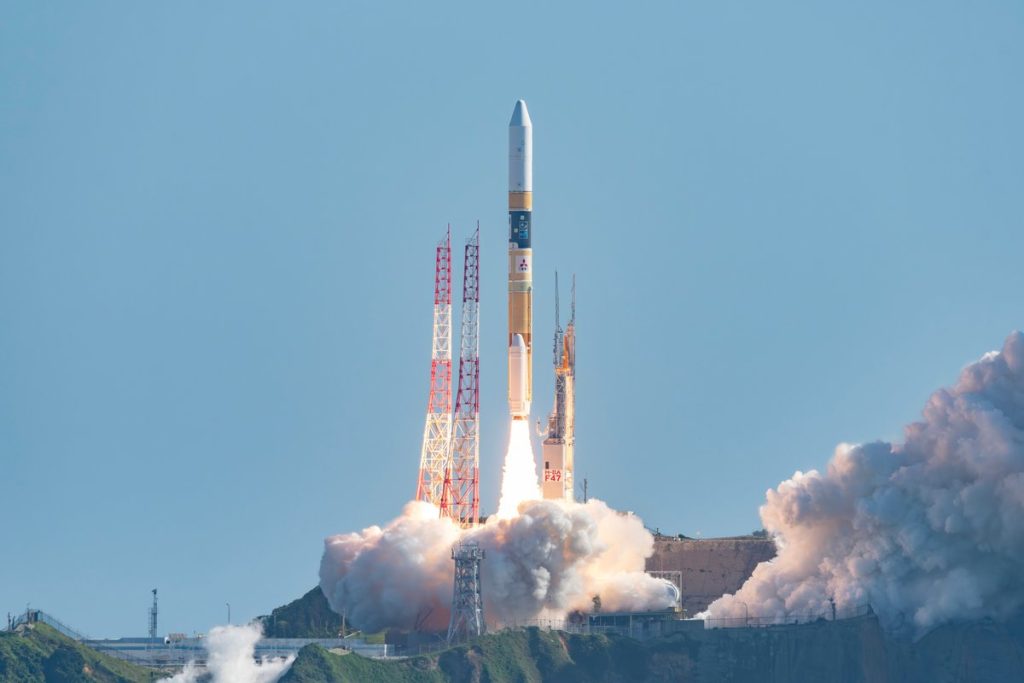
The H-IIA 202 is a non-reusable, inactive launch vehicle manufactured by Mitsubishi Heavy Industries (established in 1884). It undertook its inaugural launch on 08/29/2001.
H-IIA (H2A) is an active expendable launch system operated by Mitsubishi Heavy Industries (MHI) for the Japan Aerospace Exploration Agency. The liquid-fueled H-IIA rockets have been used to launch satellites into geostationary orbit, to launch a lunar orbiting spacecraft, and to launch Akatsuki, which studied the planet Venus. Launches occur at the Tanegashima Space Center.
H-IIA 202 Specifications
| Variant | 202 |
|---|---|
| Length | 53 m |
| Diameter | 4 m |
| Stages | 2 |
| Launch Mass | 285 T |
| Takeoff Thrust | 2260 kN |
| LEO Capacity | 10000 kg |
| GTO Capacity | 4100 kg |
| Launch Cost | $90,000,000 |
H-IIA 202 Launch Record
| Total Launches | 35 |
|---|---|
| Successful Launches | 35 |
| Consecutive Successful Launches | 35 |
Manufacturer
President: Seiji Izumisawa
Mitsubishi Heavy Industries, Ltd. is a Japanese multinational engineering, electrical equipment and electronics company headquartered in Tokyo, Japan. MHI is one of the core companies of the Mitsubishi Group.
MHI's products include aerospace components, air conditioners, aircraft, automotive components, forklift trucks, hydraulic equipment, machine tools, missiles, power generation equipment, printing machines, ships and space launch vehicles. Through its defense-related activities, it is the world's 23rd-largest defense contractor measured by 2011 defense revenues and the largest based in Japan.